Novinite.com
04 Jun 2026, 20:05 GMT+10
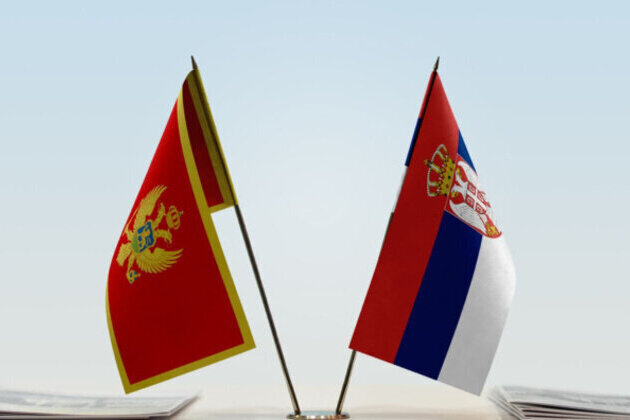
Relations between Serbia and Montenegro entered a new period of tension just before the European Union-Western Balkans summit in Tivat, after a security dispute involving dozens of Serbian citizens escalated into a diplomatic confrontation between the two neighboring countries.
The controversy began when Montenegrin authorities refused entry to 87 Serbian nationals who arrived on a charter flight from Belgrade. Officials in Podgorica said the group was barred from entering the country because it was assessed as posing a threat to national and internal security.
According to Montenegrin police, several of the individuals had participated in rallies supporting the Serbian government, while others were allegedly connected to incidents involving violence against anti-government protesters in Serbia. Authorities described the operation as a preventive security measure intended to eliminate any risk of disruption ahead of the regional summit.
During inspections, police reportedly discovered communication equipment, including a radio station, along with a large banner bearing the slogan "Serbia Wins," a phrase closely associated with President Aleksandar Vucic's ruling Serbian Progressive Party. Some Montenegrin media outlets subsequently referred to the group as "Vucic's informal security detail."
The decision triggered a sharp reaction from Serbia's Security and Information Agency (BIA). The agency announced that it had formally advised President Aleksandar Vucic not to travel to Montenegro because of what it described as "hostile activities of foreign intelligence services and criminal organizations."
In its statement, the BIA claimed that operational information indicated that Radoje Zvicer, identified as the alleged leader of the notorious Kavac criminal clan and one of Europe's most wanted fugitives, was currently hiding in Montenegro. Serbian officials also expressed frustration over security arrangements surrounding the summit.
"Contrary to professional standards and responsible conduct, the security assessment repeatedly requested from the host service in Montenegro was never provided," the Serbian intelligence agency stated.
Montenegro rejected suggestions that participants would be at risk. The country's Foreign Ministry responded by emphasizing that all security measures were in place for the event and that every delegation would be fully protected.
"As a responsible and reliable NATO member, Montenegro guarantees all guests a safe, secure, and pleasant stay," the ministry said, adding that authorities were determined to ensure the summit proceeded successfully and without distractions.
Despite the warning issued by Serbian intelligence, Vucic made it clear that he would travel to Montenegro. Speaking after a meeting with European Council President Antonio Costa, the Serbian leader confirmed he had reviewed the security assessment but would not change his plans.
"I received the written warning and read it. I am going to Montenegro because it is important to represent Serbia. I will discuss everything there and tell them directly. I am not afraid to speak the truth," Vucic said.
He stressed that he had already committed to attending the summit during discussions with European Commission President Ursula von der Leyen and Antonio Costa.
"I gave my word and I will keep it," the Serbian president added.
Vucic also challenged claims that the whereabouts of Zvicer were unknown to Montenegrin authorities.
"I don't know who considers it a secret that Zvicer is in Montenegro. Whenever major events take place, they arrest some lower-level figure around him and claim the issue has been solved," he remarked.
The latest dispute comes after several weeks of increasingly strained relations between Belgrade and Podgorica. Earlier, Vucic publicly accused Montenegro of allowing organized criminal groups to strengthen their influence and expand operations into Serbia.
Those accusations followed the arrest of Belgrade police chief Veselin Milic, who is suspected of helping conceal a murder linked to organized crime networks.
At the time, Vucic blamed Montenegro-based criminal organizations for fueling violence in Serbia.
"You brought this evil here. The Skaljari and Kavac clans did not originate in Belgrade," he said.
The rivalry between the Kavac and Skaljari clans, both originating from the Kotor region of Montenegro, began in 2014 after the disappearance of a cocaine shipment in Valencia. Since then, their conflict has evolved into one of the Balkans' deadliest organized crime wars, leaving more than 70 people dead across Montenegro, Serbia, and several other countries.
The dispute has cast a shadow over the EU-Western Balkans summit in Tivat. The gathering was intended to highlight regional cooperation and European integration, but it now opens against the backdrop of renewed political friction and mutual accusations between two neighboring states whose relations have become increasingly strained.
Get a daily dose of Munich Metro news through our daily email, its complimentary and keeps you fully up to date with world and business news as well.
Publish news of your business, community or sports group, personnel appointments, major event and more by submitting a news release to Munich Metro.
More InformationGENEVA, Switzerland: Global health organization CEPI has committed roughly $60 million to accelerate the development of vaccines against...
BUDAPEST, Hungary: Hungarian Prime Minister Peter Magyar said on June 1, after meeting President Tamas Sulyok, that if the president...
BECOV NAD TEPLOU, Czech Republic: A collection of wine from the late 19th century, which had been hidden for many years under the floor...
NEW YORK CITY, New York: Oil prices surged by about $5 a barrel on June 1 as fears of further disruptions to global energy supplies...
DUBLIN, Ireland: The Government plans to move ahead with proposals to remove the triple lock system that controls overseas deployment...
NEW YORK CITY, New York: Meta's effort to train artificial intelligence systems using detailed records of employee computer activity...
TOKYO, Japan: Severe tropical storm Jangmi hit Japan on June 3, bringing strong winds and heavy rain that disrupted transport and businesses...
BELFAST, Northern Ireland: A man who pretended to be live-streaming a video game on YouTube to create an alibi while he killed his...
KHARTOUM, Sudan: The United Nations says sexual violence has become one of the main features of the war in Sudan, which is now in its...
GENEVA, Switzerland: The United Nations weather agency said on June 2 that a moderate or possibly strong El Niño could develop, which...
GENEVA, Switzerland: Global health organization CEPI has committed roughly $60 million to accelerate the development of vaccines against...
BUDAPEST, Hungary: Hungarian Prime Minister Peter Magyar said on June 1, after meeting President Tamas Sulyok, that if the president...